

If you have questions about these changes or how they may affect your patients, contact the UHA Utilization Management Department.
To help ensure timely processing of authorization requests, providers should use the most current Umpqua Health Alliance Prior Authorization Form. Outdated versions continue to be submitted, which may delay processing or trigger requests for additional information.
Please submit all authorization requests using the most current form available on the website.
If you have questions, contact the UHA Utilization Management Department.
Umpqua Health Alliance is providing guidance on completing outpatient surgery authorization requests accurately.
Umpqua Health Alliance (UHA) is preparing for upcoming changes to the Healthier Oregon Program that will affect how some members receive care.
Transition Effective January 1, 2027
Healthier Oregon members will transition from Coordinated Care Organization (CCO) coverage to OHP Open Card (fee-for-service).
Will my Healthier Oregon patients still be assigned to UHA?
Not necessarily. Healthier Oregon patients may no longer be assigned to UHA once they transition to Open Card.
Will billing and authorization processes change?
Yes. Billing, referrals, and authorization processes may differ for Open Card members compared to CCO members.
Will member coverage benefits change?
No. Coverage benefits remain consistent under OHP regardless of transition status.
If you have questions about a member’s coverage or need support during a transition, please contact UHA at 541-229-4842 and ask to be connected to the Provider Relations Department.

Umpqua Health Alliance (UHA) is hosting a Mental Health First Aid Learning Collaborative for providers looking to expand their skill set and earn continuing education units (CEUs). The training is free and open to providers seeking CEUs for certification or license renewal.
Scan the QR code on the flyer or register online. Space is limited, so early registration is encouraged.
If you have questions, contact Andrea Brown, Traditional Health Worker (THW) Liaison, at abrown@umpquahealth.com.
Stephanie Doud, a certified Community Health Worker (CHW), serves as a Patient Navigator at Umpqua Health Newton Creek Clinic. Her work embodies a simple but powerful philosophy: show up in the places where people live, work, and gather, not just in the clinical setting, and build relationships rooted in genuine support and advocacy.
Stephanie’s journey to becoming a Traditional Health Worker (THW) began in her previous role at a community-based organization, where she discovered a deep passion for helping individuals within their own communities. “Through that experience, I discovered how much I enjoyed helping individuals within their communities and meeting them where they are, whether that was in their homes, public settings, or other locations that best fit their needs,” Stephanie reflected. That commitment to relationship-building and support outside the traditional office setting remains central to her work today.
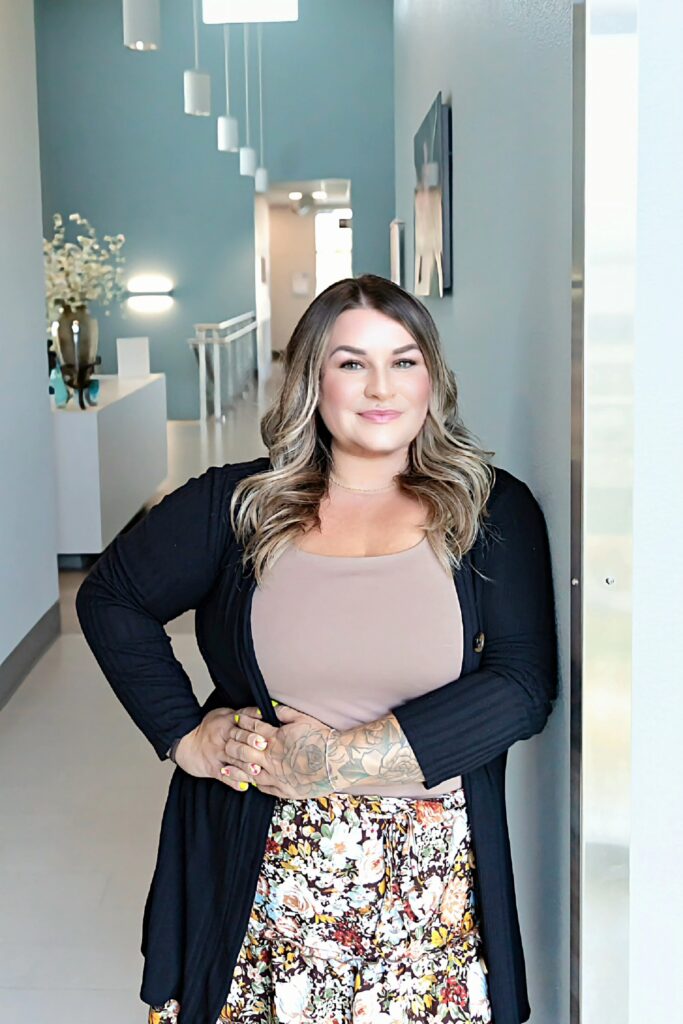
In her role as a Patient Navigator, Stephanie works with people facing some of the most significant obstacles to health and well-being. Housing insecurity and transportation stand out as two of the most formidable barriers. Rather than viewing these challenges as insurmountable, Stephanie approaches them as opportunities to advocate fiercely for her clients. “I find these challenges rewarding because they provide opportunities to advocate for clients and help connect them with resources they need.”
Transportation barriers are particularly striking to Stephanie. “Many individuals miss medical appointments, are unable to pick up medications, or struggle to access necessary services simply because they do not have reliable transportation.” She envisions a community with more flexible and accessible transportation options, understanding that reliable transit directly impacts whether people can maintain their health and stay connected to care.
Housing is equally critical. Stephanie knows that individuals who are unhoused or experiencing unstable housing face compounded barriers to focusing on their health and wellness. “Housing is another challenge that plays a major role in a person’s physical and mental health,” she noted. “People who are unhoused or who experience unstable housing have a harder time focusing on their health. Having better access to housing would produce better health outcomes and give people a stronger foundation from which to address other aspects of their well-being.”
Despite the complexity of the barriers she encounters, Stephanie’s compassion and understanding for the people she serves creates tangible impact. Her perspective on the work captures its essence: “It isn’t always easy, but being a THW is knowing that even small acts of support can create life-changing outcomes for the people we serve.”
If you have patients who would benefit from navigation support, assistance addressing social drivers of health, or advocacy to help access community resources, Stephanie is here to help. Reach out to Umpqua Health Alliance to connect your patients with Stephanie.

JAMA Review
Aidan G. Cashin, PhD; Roger Chou, MD; Melissa B. Weimer, DO, MCR; et al.

Umpqua Health Alliance (UHA) has added a new Asthma and COPD Medication Guide to its website as a quick-reference tool for providers. Developed by the American Lung Association, the guide offers a visual overview of available asthma and COPD therapies, including inhaled corticosteroids (ICS), bronchodilators, combination inhalers, biologics, SMART/MART therapy, and Anti-Inflammatory Reliever (AIR) options.
The guide is designed to complement the National Institutes of Health (NIH) Asthma Guidelines and the Global Initiative for Chronic Obstructive Lung Disease (GOLD) Guidelines. NIH and GOLD guidelines remain the primary evidence-based resources for disease management, step therapy, and treatment selection. This tool adds a practical, at-a-glance summary of medication classes and products to support treatment discussions and prescribing decisions.
If you have questions about this resource, contact UHA Pharmacy Services.
Umpqua Health Alliance (UHA) has completed its second quarter 2026 Pharmacy and Therapeutics review. The following formulary and prior authorization (PA) updates are effective as noted below.
If you have questions about these formulary or prior authorization updates, contact UHA Pharmacy Services.

Community programs offer a practical way to bridge clinical guidance with daily routines. The ongoing activities described here are free, locally available and designed for consistent participation. These options can be aligned with care plans when community-based support is appropriate.
Weekly group walks led by a local medical provider. Open to all fitness levels. No registration required.
Ongoing yoga sessions focused on mobility, breathwork and stress reduction. Suitable for all levels. No registration required.
Monthly restorative yoga session focused on relaxation and stress reduction.
Encourage your patients to join the FREE Community-Wide Challenge to Thrive!
Join anytime and complete at least six well-being activities by December 31, 2026.
To learn more and register, visit:
thriveumpqua.com/wellbeingchallenge
Monthly community event featuring art activities and games for all ages.
Umpqua Health Alliance (UHA) has launched Prevention First, a data-driven pilot program designed to improve population health outcomes for adult UHA members. The program encourages and rewards completion of key preventive services tied to 2026 quality measures and population health priorities.
How It Works
Members can earn a $15 Sherm’s Thunderbird Market gift card for each completed qualifying service, up to $75 total, for services completed by Dec. 31, 2026. Gift cards are mailed quarterly to allow time for claims processing and verification.
Eligible Services
Program Goals
Why Provider Engagement Matters
Provider engagement directly improves quality metrics, patient outcomes and preventive care adherence. Actively promoting Prevention First during visits increases patient participation, supports value-based care goals and strengthens patient-provider relationships through proactive, preventive health management. Encouraging preventive care also supports early diagnosis, timely intervention and better management of chronic conditions, while helping identify social drivers of health (SDoH) and reducing avoidable emergency department and urgent care visits.
We encourage you to actively promote Prevention First with your adult UHA patients.
Limitations and restrictions apply. Program details are subject to change.
Resources
Review the Prevention First flyer and Provider FAQ for complete program details. If you have questions about the Prevention First Incentive Program, contact Dani Everson, Population Health Program Manager, at deverson@umpquahealth.com.
Connecting Point is a mobile navigation program bringing essential services directly to Douglas County community members in need. Available Monday through Friday at locations across the region — including Roseburg, Winston, Sutherlin, Reedsport, Myrtle Creek and Drain — the program offers shower facilities, naloxone, hygiene kits, mental health and substance use service connections, employment services, veteran services, clothing, food and more. The program is a collaborative effort among HIV Alliance, Oregon Department of Human Services, Adapt, UCAN, Umpqua Health Alliance, DPHN, HADCO, and Easterseals. For questions, call (541) 228-8074 or email dzahner@allianceor.org.

The following providers have been removed from the Umpqua Health Alliance network:
| Provider Name | Effective Term Date | Group |
| Christen Coady, QMHA-R | 06/01/2026 | Evergreen Family Medicine – Edenbower |
| Michael Pretz, LPC | 06/10/2026 | Evergreen Family Medicine – Edenbower |
| Lisa Mai, PAC | 04/20/2026 | PeaceHealth – Cottage Grove |
| Mary Jo Laniewski, DO | 05/31/2026 | PeaceHealth – Florence Emergency |
| Jodi Nelson, PHARM | 06/04/2026 | PeaceHealth – Florence Family Medicine |
| Cathy Rogers, CRNA | 06/16/2026 | CEP America – Anesthesia |
| Grant Meeker, MD | 06/16/2026 | CEP America – Anesthesia |
| Jennifer Meeker, MD | 06/16/2026 | CEP America – Anesthesia |
| Steven Follet, MD | 06/16/2026 | CEP America – Anesthesia |
| Amy Tipton, LCP | 06/25/2026 | Cow Creek Health and Wellness – Roseburg |
| Christopher Hudgeon, QMHA | 06/30/2026 | Douglas CARES |
| Christopher Caldwell, QMHA | 06/30/2026 | Douglas CARES |
| Haleigh Gallego, QMHA-I | 06/30/2026 | Douglas CARES |
| Kristie Knight, QMHA | 06/30/2026 | Douglas CARES |
| Markelle Owens, QMHA | 06/30/2026 | Douglas CARES |
| Samantha Uram, QMHA | 06/30/2026 | Douglas CARES |
| Timothy Leonard, QMHA | 06/30/2026 | Douglas CARES |
The following providers have joined the Umpqua Health Alliance network:
| Provider Name | Effective Date | Facility |
| Dawn Nichols, LPC | 06/01/26 | Evergreen Family Medicine |
| Mark Bogle, CRM | 06/02/26 | Evergreen Family Medicine |
| Terra Anderson, RDH | 05/01/26 | Siskiyou Community Health Center |
| Stanton Dotson, DDS | 05/01/26 | Siskiyou Community Health Center |
| Donald Draper, DMD | 05/01/26 | Siskiyou Community Health Center |
| Joe Dunn, DMD | 05/01/26 | Siskiyou Community Health Center |
| Rebecca Forshaw, DMD | 05/01/26 | Siskiyou Community Health Center |
| Peter Gonzalez, DDS | 05/01/26 | Siskiyou Community Health Center |
| Darren Huddleston, DMD | 05/01/26 | Siskiyou Community Health Center |
| Brooks Hunsaker, DMD | 05/01/26 | Siskiyou Community Health Center |
| Karen Martinez, DDS | 05/01/26 | Siskiyou Community Health Center |
| Richard Miller, DDS | 05/01/26 | Siskiyou Community Health Center |
| Kevin Mudrow, DMD | 05/01/26 | Siskiyou Community Health Center |
| Michael Reynolds, DDS | 05/01/26 | Siskiyou Community Health Center |
| Allison Swanson, DMD | 05/01/26 | Siskiyou Community Health Center |
| Peter Tommerup, DDS | 05/01/26 | Siskiyou Community Health Center |
| Carmen Royce, RN, QMHA-R | 08/11/25 | Adapt – Mental Health Division |
| Jannette Mydland, LPC | 04/21/26 | Adapt – Mental Health Division |
| Caroline Hunter, DDS | 05/01/26 | Advantage Dental – Grants Pass |
| Julia Javarone, DDS | 05/01/26 | Rogue River Endontics |
| Shashank Joshi, BDS, MS | 05/01/26 | Umpqua Periodontics & Implants |
| Shawn Lemert, DDS | 05/01/26 | Shawn Lemert DDS |
| J. Matt Tripp, LD | 05/01/26 | SmileMakers Denture and Dental |
| Tyler Wright, DMD | 05/01/26 | Darren Huddleton DMD |
| Steven Giss, MD | 05/26/26 | PeaceHealth Florence – General Surgery |
| Lauren Ham, PSS_AMH | 06/09/26 | Adapt Integrated Health |
| Cyndra Krogen-Morton, QMHP-R | 05/13-26 | Adapt Integrated Health |
| Jennifer Lowry, QMHA-R | 06/08/26 | Adapt Integrated Health |
| Francis Vain, IMSW | 01/22/26 | Adapt Integrated Health |
| Rachael Whitebrg, CRM | 05/08/26 | Adapt Integrated Health |
| Jennifer Rossi, MD | 06/10/26 | PeaceHealth – Florence Emergency Dept. |
| Breonn Anderson, CSWA | 06/16/26 | NTX Therapy |
| David Bear, MD | 06/16/26 | Slocum Orthopedics |
| Karen Berkey, CADC II | 06/16/26 | Serenety Lane Eugene |
| Alice Blaj, BCBA | 06/16/26 | Positive Behavior Supports Corp |
| Aimee Clark, CADC II | 06/16/26 | Umpqua Health – Newton Creek |
| Katherine Diaz, BCBA | 06/16/26 | Positive Behavior Supports Corp |
| Tonya Ellenson, BCBA | 06/16/26 | Positive Behavior Supports Corp |
| Daniel Fitzpatrick, MD | 06/16/26 | Slocum Orthopedics |
| Steven Gay, NP | 06/16/26 | Oregon Urology Institute |
| Jenna Godfrey, MD | 06/16/26 | Slocum Orthopedics |
| Casey Hinebaugh-Gavino, LPC | 06/16/26 | NTX Therapy |
| Tara Khodadadian, BCBA | 06/16/26 | Positive Behavior Supports Corp |
| Lucas Korcek, MD | 06/16/26 | Slocum Orthopedics |
| Fawn Morosky, BCBA | 06/16/26 | Positive Behavior Supports Corp |
| Lisa Shostak, BCBA | 06/16/26 | Positive Behavior Supports Corp |
| James Tougas, NP | 06/16/26 | Tougas Therapy LLC |
| Elizabeth Watson-Stites, PhD | 06/16/26 | Slocum Orthopedics |
| Louise Zellmer, BCBA | 06/16/26 | Positive Behavior Supports Corp |
| Penjman Majd, MD | 05/07/26 | CEP America – Anesthesia PC |
| Lloyd Bellah, MD | 06/22/26 | PeaceHealth – Florence |
Umpqua Health Alliance (UHA) has contracted Oregon Health Care Interpreter Maria Salazar to help expand access to high-quality language services for Spanish-speaking patients throughout the community. Salazar is based in Douglas County and is currently available to support interpreter service requests. She joins the existing interpreter team of Ana Garcia and Gaby Rosales.
Connecting Spanish-speaking patients with qualified interpreters supports clearer communication, stronger patient-provider relationships and better health outcomes.
If you have questions about language access services, contact UHQualityImprovement@umpquahealth.com.
Each year, the Oregon Health Authority issues a set of quality measures that drive the work and goals of coordinated care organizations statewide, with a focus on improving care quality and outcomes for people with Oregon Health Plan coverage.
Umpqua Health Alliance (UHA) is pleased to announce that it achieved 11 of 13 incentivized quality measures for Measure Year 2025. This is a significant achievement, made possible in large part by the efforts of provider and community partners across Douglas County.
| Depression Screening and Follow Up Plan | 73.0% | 73.8% |
| Childhood Immunization Status – Combo3 | 54.0% | 69.0% |
| Assessments for Children in DHS Custody | 93.4% | 93.2% |
| Comprehensive Diabetes Care – HbA1c Poor Control | 21.5% | 20.0% |
| Initiation and Engagement of SUD Treatment – Engagement Total Cohort Adult | 18.3% | 18.8% |
| Initiation and Engagement of SUD Treatment – Initiation Total Cohort Adult | 40.0% | 49.0% |
| Immunization for Adolescents – Combo2 | 30.6% | 40.9% |
| Meaningful Language Access – Component 1 Survey Must Pass Questions | 114.4% | 97 minimum points |
| Meaningful Language Access – Component 2 Quality Rate | 13.7% | 50.0% |
| Oral Evaluation for Adults with Diabetes | 34.5% | 35.0% |
| Prenatal Postpartum Care – Postpartum Care | 90.0% | 87.0% |
| Preventive Dental or Oral Service Utilization Age 1 to 5 | 59.4% | 60.6% |
| Preventive Dental or Oral Service Utilization Age 6 to 14 | 69.3% | 67.3% |
| Social determinants of health Component 1 | 100.0% | |
| Social determinants of health Component 2 Hybrid Reporting Completion | 100.0% | 90.0% |
| Young Children Receiving Social-Emotional Issue-Focused Intervention/Treatment Services | 6.2% | 11.0% |
| Child and Adolescent Well-Care Visits Age 3 to 6 | 76.7% | 72.0% |
Umpqua Health Alliance came close to meeting the remaining two measures as well, a result worth celebrating in its own right. Closing that gap will be a focus for 2026, alongside sustaining performance on the measures already achieved.
Thank you for your ongoing partnership and your care for the people and communities we all serve.
If you have questions about quality measures or performance results, contact UHQualityImprovement@umpquahealth.com.
Building on its 2025 performance, in which Umpqua Health Alliance (UHA) achieved 11 of 13 quality measures, UHA has identified four Measures of Focus for 2026.
UHA selected these measures based on performance trends throughout 2025, rather than year-end results alone. Evaluating performance across the full year helped UHA identify opportunities to strengthen care, improve outcomes and better support members and providers.
If you are interested in learning more about these measures or improving your performance, contact UHQualityImprovement@umpquahealth.com.
Umpqua Health Alliance (UHA) is committed to ensuring members receive safe, high-quality care. As part of this commitment, UHA maintains a formal process for identifying, reviewing, investigating and resolving Potential Quality of Care (PQOC) concerns involving services provided by contracted practitioners and providers. Concerns are reviewed in a fair, consistent and objective manner that serves the best interest of members.
A quality or critical incident is any event that may adversely affect a member’s health or safety, or that may indicate care did not meet accepted professional standards.
When a concern is reported, UHA reviews the information, investigates as appropriate, and tracks and trends findings. If a confirmed deviation from professional standards of care or member safety is identified, UHA develops a corrective action plan.
Providers and staff are encouraged to report potential quality of care concerns using the UHA Potential Quality of Care (PQOC) Referral Form. Completed forms can be submitted to UHAGrievance@umpquahealth.com.
Timely reporting helps UHA identify opportunities to improve the quality and safety of care delivered to members. Thank you for your partnership and continued commitment to providing high-quality care.
Access the PQOC Referral Form. If you have questions, contact UHAGrievance@umpquahealth.com.


Giardia, the most commonly reported intestinal parasitic infection in the United States, continues to be an important cause of prolonged diarrheal illness, particularly during the summer months when recreational water activities and outdoor travel increase. Caused by the protozoan parasite Giardia lamblia (also known as G. intestinalis or G. duodenalis), infection occurs through the fecal-oral route by ingesting contaminated water, food, or through person-to-person transmission. Symptoms typically develop 1–2 weeks after exposure, although some infected individuals remain asymptomatic while continuing to shed the parasite and contribute to transmission.
The Oregon Health Authority and the Centers for Disease Control and Prevention (CDC) encourage healthcare providers to consider giardiasis in patients presenting with persistent diarrhea, abdominal cramping, bloating, excessive gas, nausea, weight loss, or malabsorption—especially if symptoms persist for more than seven days or if there is a history of untreated surface water exposure, camping, international travel, recreational water exposure, childcare exposure, or household contacts with similar illness. Young children, childcare workers, backpackers, international travelers, and immunocompromised individuals are at increased risk for infection. Although some infections are self-limited, treatment is recommended for symptomatic patients to shorten illness, reduce parasite shedding, and help prevent ongoing transmission.
Giardia is commonly associated with drinking untreated water from rivers, lakes, and streams, but outbreaks have also been linked to contaminated drinking water systems, recreational water venues, childcare centers, and person-to-person spread. Because the parasite is chlorine tolerant at concentrations typically used in swimming pools, transmission can occur when infected individuals contaminate recreational water. Patients should be advised to avoid swimming while experiencing diarrhea and for at least two weeks after symptoms resolve to reduce the risk of transmission.
Multiplex gastrointestinal polymerase chain reaction (PCR) panels have become the preferred diagnostic test in many clinical laboratories because of their high sensitivity and rapid turnaround time. Stool ova and parasite (O&P) examination remains useful in select circumstances, particularly when non-Giardia parasitic infections are suspected. Because cyst shedding can be intermittent, repeat stool testing may occasionally be necessary if clinical suspicion remains high despite an initial negative result. Recommended treatment includes tinidazole, metronidazole, or nitazoxanide, depending on patient age, pregnancy status, and other clinical considerations. Providers should also counsel patients on proper hand hygiene, safe drinking water practices, and avoiding untreated surface water unless it has been appropriately filtered or boiled.
Giardiasis is a reportable disease in Oregon. Prompt reporting of suspected or confirmed cases enables public health to identify common exposure sources, investigate potential outbreaks, and implement timely control measures to reduce ongoing transmission within the community. Early notification is particularly important when cases are associated with childcare settings, recreational water venues, or shared drinking water sources.


Oral health is a key factor and one of the most underrated aspects of overall full-body health. Clogged arteries, diabetes and difficulties during pregnancy are just some of the complications that poor oral health can lead to.
Brushing, flossing and visiting your dentist regularly are recommended habits to maintain a healthy mouth, but there are other simple and natural ways you can improve your oral health. Did you know that a simple change in your diet can have a profound affect on your oral health?


